Partnerships / Government
Government partnershipsA pilot a city can evaluate before it decides.
A municipality evaluates a proposed 10–25-scooter pilot before deciding whether to expand. The range is a proposal: it depends on the site and on serviceable equipment.
How a municipal pilot runs
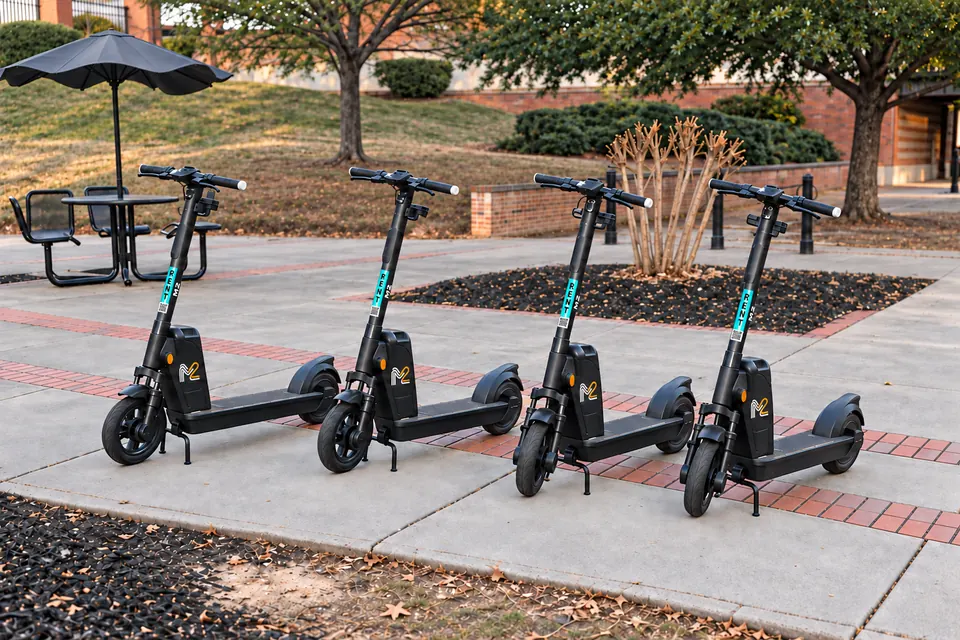
Four steps, from the first walk around your site to the daily work that keeps every scooter ready. Tap a step, or a place on the model.
- Agreed route
- Riding boundary
- Walk-only area
- Parking hub
Routes, parking and boundaries
Design the program
Start with the place.
We walk the streets with your team. Together we choose the route riders take, mark the return zones, and draw the boundary where riding stops. Plazas and doorways you name stay walk-only.
An agreed site plan before a scooter arrives.
Connect the journey
Make the short trips easier.
Riders unlock a scooter in the M2GO app and follow the route chosen with you, from the transit stop to the downtown block. The boundary you set is geofenced: riding stops at the line, and the areas you mark walk-only stay walk-only.
A practical connection between everyday destinations.
Keep the way clear
A proper place to finish.
Rides end at a parking hub: a marked return zone beside the walkway, never on it. Scooters stand upright, and curb ramps, doorways and crossings stay clear.
Parking planned around the people using the space.
Care for the fleet
Local people. Daily attention.
Once a program is running, our local team works a service round: checking each zone, charging, moving scooters that are out of place and taking in any that need repair. Your team has a named local contact, and we review the program together on a schedule you set.
One accountable local team, and a name to call.
Riding areas, parking hubs and the service plan are agreed with each site.
The questions a council will ask, answered up front.
Right of way and accessibility
Walk one short-trip corridor with M2. Agree limits, parking and where riding is not allowed. Curb ramps, doorways, accessible routes and crossings stay clear, and return zones sit beside the path.
Geofencing and operational boundaries
The riding area, slow zones and walk-only zones are drawn with the city and set in M2GO. Rides end inside approved parking, confirmed by an end-of-ride photo.
Permits and procurement
M2 works through the permit, regulatory and procurement steps the city identifies. Nothing starts without them.
Fleet maintenance and inspections
Brakes, lights, tires, deck and battery are checked before a scooter returns to service. Named contacts cover inspections, complaints and equipment recovery.
Incident response and recovery
How an incident is reported, who responds, how misplaced or damaged equipment is recovered, and how the city is told what was done.
Reporting and accountability
Regular reports cover use, parking issues, incidents and the action taken on each, on a schedule the city sets.
Community outreach and local work
Rider education and outreach before launch, and field work that goes to local residents and students first.
Adjusting or ending a pilot
Agree in advance when to adjust, pause, extend or end the pilot, and who removes the equipment.
A page for the people who were not in the room.
Share it with your department head, city manager or council liaison. Then book time with a founder.
Tell us about your municipality.
Tell us about the host and the trip. Marvin handles host requests and brings Mikell in for executive decisions.
We ask for the municipality, your department, a contact and the transportation need.
Written pilot request
Book a call with the founders
Pick a time and add a few details. Your confirmed booking includes a Google Calendar invitation and a Google Meet link.
Loading meeting options…
Prefer to leave a message? Send us a note