
Partnerships / Commercial
Commercial partnershipsConnect the buildings people already move between.
For owners, developers and property managers. Start with a mixed-use property where residents, workers and visitors move between homes, shops, jobs and transit.
How a property pilot runs
Four steps, from the first walk around your site to the daily work that keeps every scooter ready. Tap a step, or a place on the model.
- Agreed route
- Riding boundary
- Walk-only area
- Parking hub
Routes, parking and boundaries
Design the program
Start with the place.
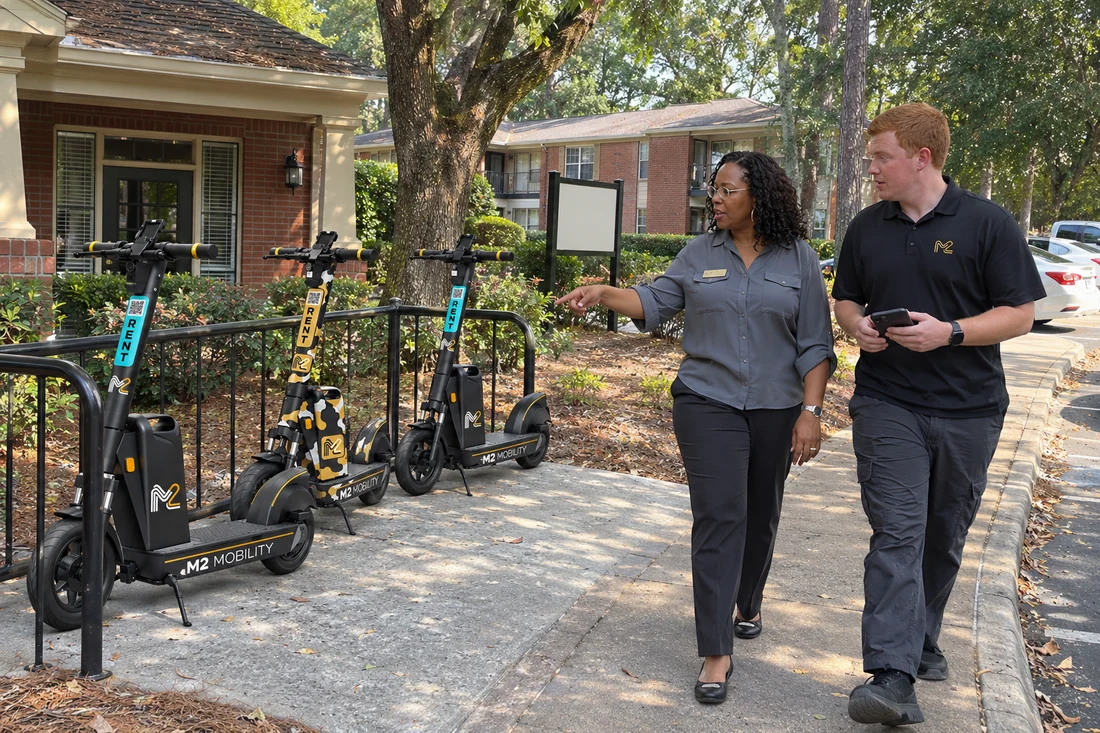
We walk your property with your team. Together we choose the route riders take, mark the return zones, and draw the boundary where riding stops. Courtyards and doorways you name stay walk-only.
An agreed site plan before a scooter arrives.
Connect the journey
Make the short trips easier.
Riders unlock a scooter in the M2GO app and follow the route chosen with you, from the apartments to the shops. The boundary you set is geofenced: riding stops at the line, and the areas you mark walk-only stay walk-only.
A practical connection between everyday destinations.
Keep the way clear
A proper place to finish.
Rides end at a parking hub: a marked return zone beside the walkway, never on it. Scooters stand upright, and curb ramps, doorways and crossings stay clear.
Parking planned around the people using the space.
Care for the fleet
Local people. Daily attention.
Once a program is running, our local team works a service round: checking each zone, charging, moving scooters that are out of place and taking in any that need repair. Your team has a named local contact, and we review the program together on a schedule you set.
One accountable local team, and a name to call.
Riding areas, parking hubs and the service plan are agreed with each site.
What a site walk settles.
Service area
A single property or several buildings. The scope is a discussion, not a package.
- Which buildings, paths and gates are inside the riding area.
- Whether rides may leave the property, and to where.
- How the area grows if the pilot works.
Operating space
Where charging and servicing happen, and what space that needs.
- A small secure room or cage with power, if charging is on site.
- Loading access for the service team.
- What stays on the property overnight.
Parking
Accessible placement of return zones, clear of entrances and fire lanes.
- Zones near the doors people use, beside the path and never on it.
- Ground markings and signs the property approves.
- Rides end only inside a zone, confirmed with a photo.
Access
Access rights for service staff, and the hours they apply.
- Gates, garages and service corridors the team may use.
- Identification the property expects.
- Quiet hours when servicing pauses.
Responsibility
Who responds when a vehicle blocks an entrance, and how that is escalated.
- One property contact and one M2 contact.
- The order of response for a blocked entrance or a damaged scooter.
- What is written into the agreement, including insurance and removal.
Connections
Which trips matter: housing to retail, work or the nearest transit stop.
- The trips residents and workers make most.
- The nearest transit stop and how riders reach it.
- Neighboring sites that could join later.
Tell us about your property.
Tell us about the host and the trip. Marvin handles host requests and brings Mikell in for executive decisions.
Written pilot request
Book a call with the founders
Pick a time and add a few details. Your confirmed booking includes a Google Calendar invitation and a Google Meet link.
Loading meeting options…
Prefer to leave a message? Send us a note